Why two former school board presidents are voting NO on a new PAUSD parcel tax:

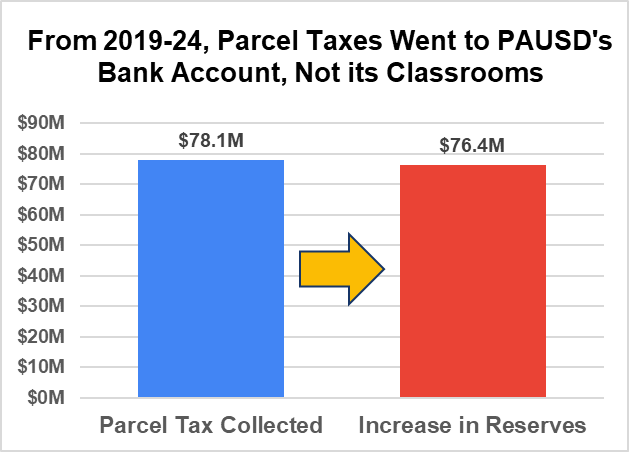
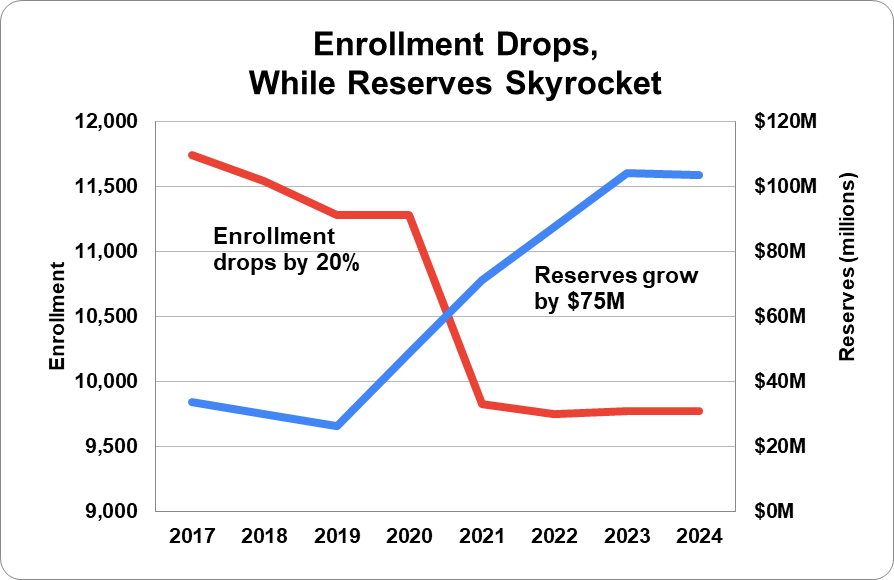
PAUSD wants another over $50 million from a new parcel tax. But the school district already has $100 million in unspent tax revenue sitting in the bank – more than the entire revenue from the last parcel tax.

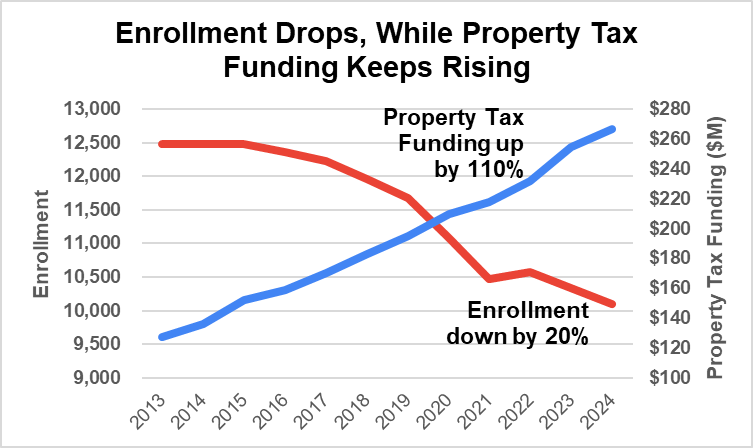
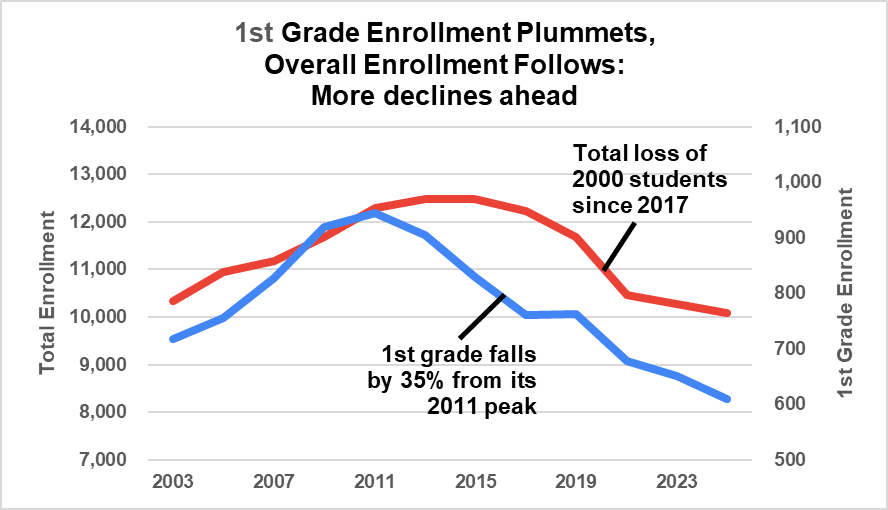
Enrollment is going down, while property taxes continue to go up. PAUSD simply doesn’t need more money beyond the $1.5 billion+ that property taxes will provide over the next 5 years.

We’ve supported every parcel tax in the past – but this one is unnecessary. We urge you to vote NO on Measure B in June.

Todd Collins (PAUSD board member, 2016-2024) and
Ken Dauber (PAUSD board member, 2014-2022)

PAUSD already has more money than it can spend, with rising property taxes and declining enrollment

$100M+

In Reserves

Up from $25M in 2019. The district is accumulating massive surpluses.

$35,000

Per Student

Funding has more than doubled since 2014, even as enrollment has dropped.

-20%

Enrollment Drop

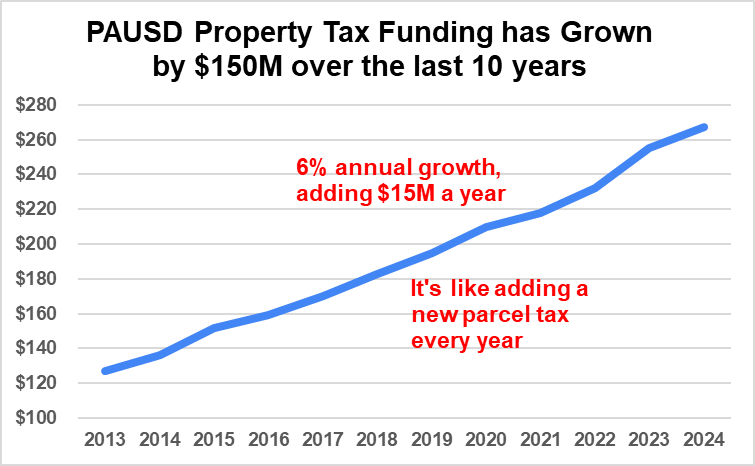
Property tax revenue grows by $15M/year despite having fewer students.

The Data: Charts & Analysis
Swipe or use arrows to view

Video Gallery

Swipe or use arrows to view

Frequently Asked Questions

Why does PAUSD say that there will be layoffs and other consequences if the parcel tax doesn’t pass, while you say that the district has plenty of money?
The school board never asked the district staff to analyze the impact of declining enrollment, increasing property tax revenues, and over $100 million in reserves. Instead, they only discussed what level of tax could be expected to pass – which is why they reduced the level to $800 / year. That also wasn’t based on an analysis of what the district actually needs. It was based on polling of what voters might approve.
What if property taxes stop going up?
The $100 million in reserves provides a very large cushion for any unexpected changes. For perspective, it’s 10 times larger than the state’s requirement for reserves, and nearly a third of an entire year’s budget. It’s larger than the entire anticipated parcel tax revenue over its full four-year term. If the world changes in unexpected ways, the reserve will provide plenty of time for a future board to adopt a parcel tax.
If the district has so much money, why does it need a parcel tax at all?
It doesn't. Property tax revenue has grown by an average of $15 million per year for the last decade, while enrollment has dropped by 20%. The district is effectively receiving much more money per student every year even without a parcel tax. Measure B is a "want," not a "need."
Is it true that Measure B funding is "locally controlled"?
Yes, but so is the district's property tax revenue and its $100 million in reserves. Being "locally controlled" doesn't mean the money is being spent wisely or that more is needed.
What are the downsides of voting for a parcel tax now? Isn’t it the safer route?
The main downside is that you and your neighbors will have less money in your pocket for things that you actually need. Padding the district’s bank account doesn’t deliver much value, certainly once it already holds $100 million. The other negative is that when the district has too much money, it’s very tempting to spend it on unnecessary things. The most likely of these is: excessive pay increases for administrators and staff. In fact, the teachers union is already pointing to the $100 million reserve to justify pay increases that are multiples of the rate of inflation, even though the district is already a very attractive place to work. There is little defense against this with over $100 million in cash reserves.
Isn’t it a big break with tradition to turn down a parcel tax?
Actually, PAUSD didn’t have a parcel tax until 2001, when the district faced increasing enrollment and slow growing property tax revenues because of the dot-com bust. The parcel tax was meant to be a short-term measure to close a funding gap. It was never meant to be a permanent tax disconnected from the district’s actual need. The property tax is the long term stable funding source for the district. The parcel tax should be paused until and unless it is needed again.
What will happen if Measure B fails?
If Measure B fails, the district will continue to receive over $300 million in property tax revenue, which grows by an average of $15 million every year. It will also have its $100 million in reserves. The district's programs and staffing will remain among the best-funded in the state. If the board decides a parcel tax is truly needed later, they can bring a new, more justified measure back to voters in a future election.
Does Measure B provide funding for classroom improvements or building safety?
No. Parcel tax revenue is for operational expenses like salaries and programs. Building improvements and safety upgrades are funded through separate Bond measures, like the $460 million Measure A bond that Palo Alto voters approved in 2018.

Official Documentation

Review the formal case against the measure as submitted to the County Registrar.

Read the argument from the Official Ballot Materials

A Message from Former Board Leaders

"Like many others, we have supported every local bond and parcel tax — until now. But the current Board needs to show they can be responsible stewards of our resources before adding over $50 million in new taxes. They need to start spending the giant reserves they already have."

— Former PAUSD Board Presidents Ken Dauber and Todd Collins